
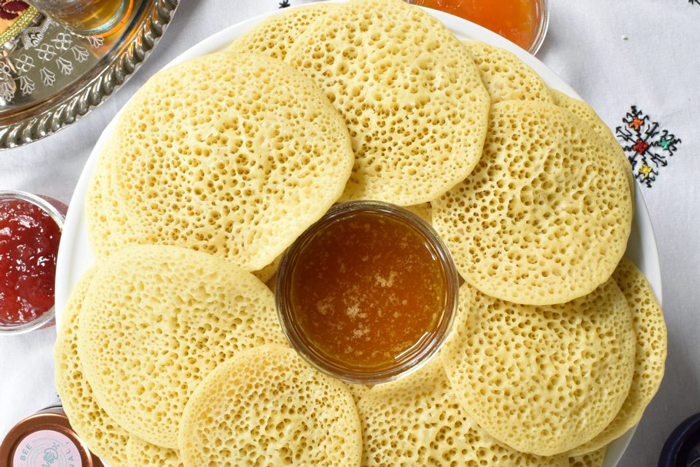
How to Make Authentic Baghrir Without Fail
Introduction
Why do so many home cooks give up on Baghrir after their first attempt? The answer almost always comes down to one thing: the 1000 holes. This delicate Moroccan “semolina pancake” is famous for the tiny, uniform bubbles that rise across its surface as it cooks — and when those holes don’t form, the whole dish can feel like a failure.
But here’s the good news: getting a perfect, sponge-like crumb full of 1000 holes isn’t about luck or years of practice in a Moroccan kitchen. It’s about understanding a few precise variables — batter hydration, yeast activity, and pan temperature — that most recipes gloss over. In this guide, we’re breaking down exactly what makes Baghrir rise the way it should, so your batter forms that signature honeycomb pattern every single time.
Table of Contents
Ingredients List
Baghrir uses a short, humble ingredient list — but each one plays a specific role in creating those signature holes.
- 2 cup fine semolina (semolina flour) – the backbone of the batter; gives Baghrir its slightly grainy, spongy texture. Substitution: fine cornmeal blended with a bit of rice flour works in a pinch, though texture will be less authentic.
- 1/2 cup all-purpose flour – softens the crumb and balances the semolina’s density.
- 2 1/4 tsp instant yeast (one packet) – the real engine behind the holes; it produces the CO2 bubbles that rise and pop on the surface.
- 1 tsp sugar – feeds the yeast and adds a whisper of sweetness.
- 1/2 tsp salt – balances flavor and controls fermentation speed.
- 1/2 tsp baking powder – gives an extra lift alongside the yeast for consistent bubbling.
- 2 1/2 to 3 cups warm water – the hydration level here is the single biggest factor in whether you get a thick pancake or a lacy, hole-riddled crepe.
Optional flavor add-ins: a pinch of turmeric for golden color, or a splash of orange blossom water folded into melted butter for serving.
Timing
- Prep time: 10 minutes (plus 20–30 minutes resting for the batter)
- Cook time: 20 minutes (roughly 2 minutes per pancake)
- Total time: about 50–60 minutes
That’s roughly 30–40% faster than most yeasted breakfast breads, which often require an hour or more of proofing. Because Baghrir batter is pourable rather than kneaded, you skip the labor-intensive proofing and shaping steps entirely.
Step-by-Step Instructions
Step 1: Blend the Batter Until Silky Smooth
Combine the semolina, flour, yeast, sugar, salt, and baking powder in a blender. Add the warm water gradually while blending on high speed for 2–3 minutes. Tip: the batter should be thin enough to coat the back of a spoon but still pour easily — think heavy cream, not pancake batter.
Step 2: Rest the Batter
Pour the blended mixture into a bowl, cover it, and let it rest in a warm spot for 10 minutes. This is when the yeast gets to work. Tip: you’ll know it’s ready when small bubbles appear across the surface — this is your first sign that your 1000 holes are on their way.
Step 3: Heat Your Pan Correctly
Use a non-stick skillet over medium heat — never oil it. Baghrir is the rare pancake that’s cooked completely dry. Tip: if your pan is too hot, the holes will form too quickly and burst before setting properly; too cool, and they won’t form at all. A drop of batter should sizzle gently, not aggressively.
Step 4: Pour and Don’t Touch
Pour a ladle of batter into the center of the pan and let it spread naturally into a circle roughly 5–6 inches wide. Do not flip it and do not spread it with a spatula. Tip: patience here is everything — the holes need undisturbed heat to form evenly from the center outward.
Step 5: Watch for the Holes to Set
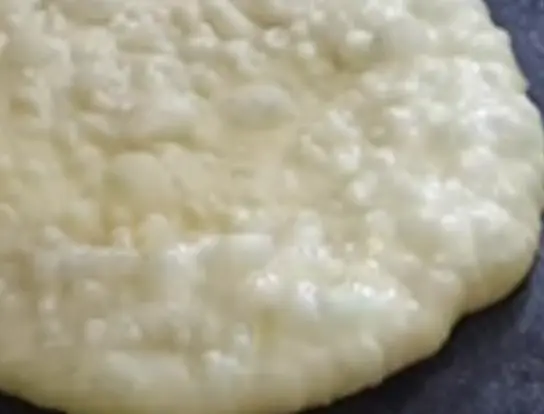
Cook only on one side for about 1.5–2 minutes. You’ll see the surface transition from wet and shiny to matte, with dozens of small holes appearing across the top. Tip: the pancake is done when there’s no wet batter left glistening on the surface — no flipping required.
Step 6: Cool on a Rack, Not a Plate
Transfer each Baghrir to a wire rack rather than stacking on a plate. Tip: stacking hot pancakes traps steam, which can make them gummy and cause the holes to collapse slightly.
Nutritional Information
Per pancake (based on a standard recipe yielding 12 pancakes):
| Nutrient | Amount |
|---|---|
| Calories | ~90 kcal |
| Carbohydrates | 18g |
| Protein | 3g |
| Fat | 0.5g |
| Fiber | 1g |
| Sodium | 95mg |
Baghrir is naturally low in fat since it’s cooked without oil, making it a lighter alternative to butter-laden Western pancakes or waffles.
Healthier Alternatives for the Recipe
- Whole wheat swap: Replace the all-purpose flour with whole wheat flour for added fiber, though expect a slightly denser hole structure.
- Gluten-free version: Use a 1:1 gluten-free flour blend in place of the all-purpose flour; the semolina substitute mentioned earlier (cornmeal + rice flour) works well here too.
- Lower sugar topping: Swap traditional honey-butter syrup for a warm date syrup or a light drizzle of maple syrup to cut refined sugar.
- Dairy-free serving: Use coconut oil or a plant-based butter blended with orange blossom water instead of traditional dairy butter.
Serving Suggestions
Baghrir is traditionally served warm, drenched in a mixture of melted butter and honey — but there’s plenty of room to get creative:
- Top with fresh berries and a dusting of powdered sugar for a brunch-table centerpiece.
- Pair with mint tea, the classic Moroccan companion.
- Turn it into a light dessert by adding a scoop of vanilla labneh or Greek yogurt with chopped pistachios.
- Serve alongside eggs and olives for a savory-sweet Moroccan-style breakfast spread.
Common Mistakes to Avoid
- Skipping the rest time: Rushing the 20–30 minute rest is the number one reason holes don’t form — the yeast simply hasn’t had time to activate.
- Using cold water: Cold water slows yeast activity significantly; always use warm (not hot) water, around 105°F.
- Oiling the pan: Oil prevents the batter from adhering and spreading evenly, which disrupts hole formation.
- Moving the batter: Any spatula contact or pan-shaking while cooking interrupts the bubble pattern.
- Batter too thick: A thick batter produces fewer, larger holes instead of the fine, even 1000-hole pattern that defines authentic Baghrir.
Storing Tips for the Recipe
- Room temperature: Baghrir is best eaten fresh but can sit covered at room temperature for up to 4 hours without drying out.
- Refrigeration: Store in an airtight container for up to 3 days; reheat briefly in a covered pan or microwave with a damp paper towel to restore softness.
- Freezing: Stack pancakes with parchment paper between each and freeze for up to 1 month. Thaw at room temperature before reheating.
- Batter storage: Leftover unused batter can be refrigerated for up to 24 hours — let it come back to room temperature and give it a quick stir before cooking.
Conclusion
Authentic Baghrir comes down to balance: the right hydration, a proper rest, and gentle, undisturbed heat. Master these, and you’ll consistently get that signature 1000 holes texture every time. Give this recipe a try, and don’t forget to share your results — leave a comment below, rate the recipe, or subscribe for more authentic recipes delivered straight to your inbox.
FAQs
Why aren’t my Baghrir holes forming? This usually means your batter rested too briefly, your water was too cold, or your pan wasn’t at the right temperature. Double-check all three before troubleshooting further.
Can I make Baghrir without a blender? Yes — whisking vigorously by hand works, though a blender ensures a smoother, lump-free batter that promotes even hole formation.
Is Baghrir the same as a crepe? No. While both are thin and pourable, Baghrir is yeast-leavened and cooked only on one side, giving it a spongy texture rather than a crepe’s thin, flexible one.
Can I prepare the batter the night before? Yes, refrigerated batter holds well overnight. Bring it to room temperature and stir before cooking for the best hole formation.
What’s the best pan for Baghrir? A well-seasoned non-stick skillet is ideal since no oil is used during cooking.
Give Me Your Opinion, Please?
There are no reviews yet. Be the first one to write one.
3 Comments
Comments are closed.